
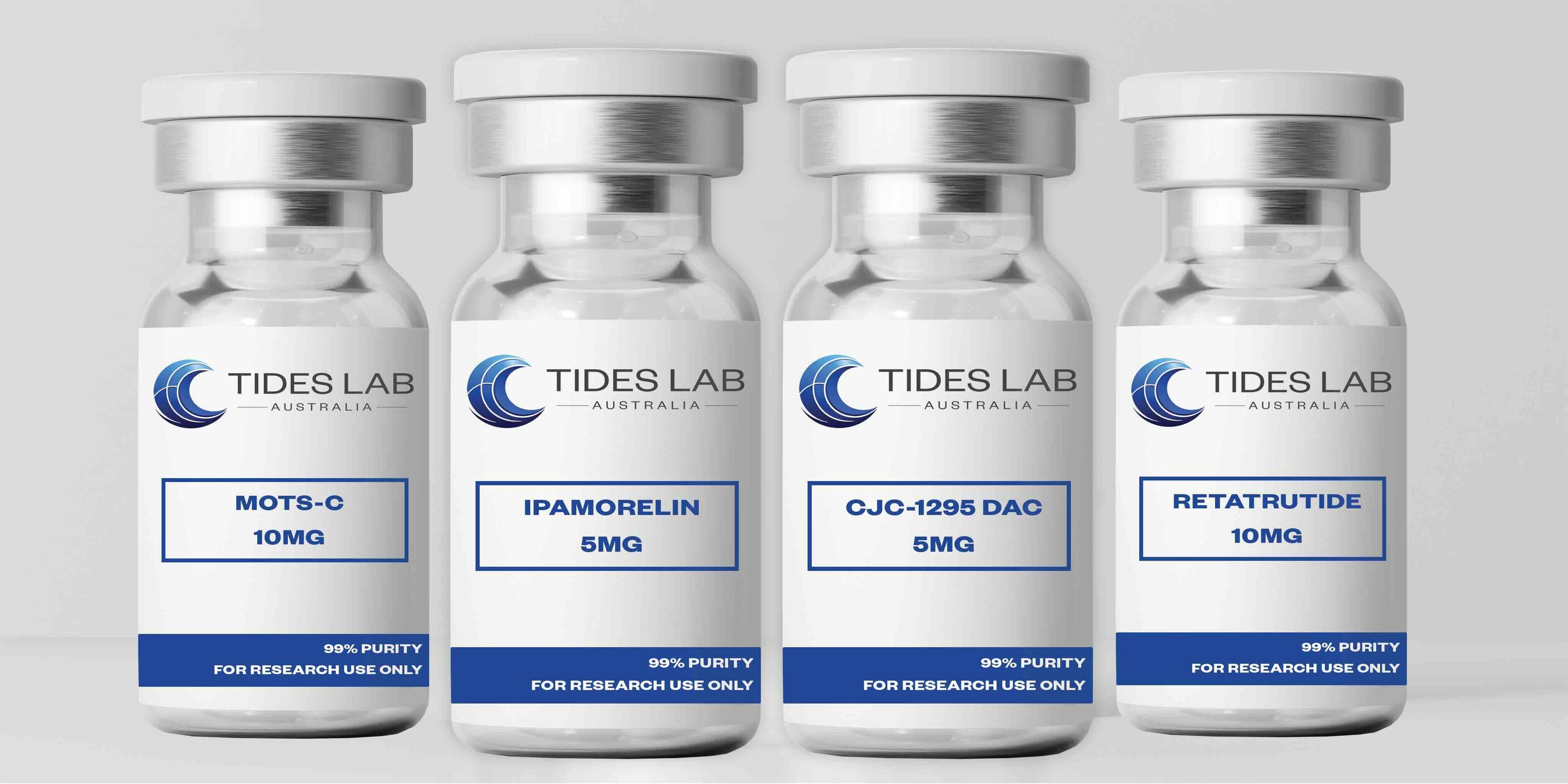
When people search for the best peptides for fat loss or the best fat burning peptides, they are usually asking one core question:
Which peptide delivers the greatest reduction in body fat while preserving lean mass?
The answer depends on the biological pathway being targeted.
Different peptides act on different receptors. Some primarily suppress appetite. Others influence energy expenditure. Some support lean mass retention during caloric deficit.
If you’re new to the mechanisms behind these compounds, first read our complete guide to Peptides for Weight Loss, where we break down GLP-1 receptor agonism, incretin signalling, and metabolic modulation in detail.
In this article, we focus specifically on which peptides are considered “best” for fat loss based on receptor profile and current research trends.
What Makes a Peptide “Best” for Weight Loss?
A peptide can only be considered “best” if it performs well across key metabolic variables:
- Appetite reduction
- Energy expenditure
- Insulin sensitivity
- Lean mass preservation
- Visceral fat targeting
- Side effect tolerability in research settings
Single-pathway peptides often excel in one of these areas.
Multi-pathway peptides influence several simultaneously.
That distinction matters.
1. Retatrutide – Triple Receptor Agonism

Among currently researched compounds, Retatrutide is often considered the most comprehensive fat-loss peptide due to its:
- GLP-1 receptor agonism
- GIP receptor agonism
- Glucagon receptor agonism
This triple receptor activity differentiates it from single- or dual-agonist peptides.
Why This Matters
GLP-1 → reduces appetite and slows gastric emptying
GIP → modulates incretin signalling
Glucagon receptor → increases energy expenditure
Most GLP-1 peptides reduce caloric intake.
Retatrutide appears to influence both:
- Energy intake
- Energy output
This dual-direction modulation is why it is often regarded in research circles as the best peptide for fat loss, particularly where body composition preservation is a priority.
Emerging data suggests multi-agonist compounds may result in a different lean mass profile compared to GLP-1–only peptides, although research is ongoing.
Important Context
Successful weight reduction in any protocol requires:
- Caloric control
- Adequate protein intake
- Resistance training
- Sleep optimisation
Peptides modulate pathways — they do not replace foundational variables.
Correct titration protocols are also critical in research settings to minimise gastrointestinal discomfort commonly observed with incretin-based compounds.
2. Tirzepatide – Dual Agonist (GLP-1 + GIP)
Tirzepatide targets:
- GLP-1 receptor
- GIP receptor
It does not stimulate the glucagon receptor.
This makes it a powerful appetite-regulating compound with enhanced metabolic signalling compared to GLP-1 alone.
However, because it lacks glucagon receptor activation, its primary mechanism remains energy intake reduction rather than increased energy expenditure.
For many research applications, this still produces significant fat loss.
3. Semaglutide – GLP-1 Receptor Agonist
Semaglutide acts exclusively on the GLP-1 receptor.
Mechanism:
- Increased satiety signalling
- Delayed gastric emptying
- Reduced caloric intake
It does not directly influence glucagon-mediated energy output.
For appetite-dominant phenotypes, GLP-1 receptor agonists can be highly effective.
However, when comparing receptor complexity, semaglutide is a narrower pathway compound compared to Retatrutide.
For a deeper explanation of how GLP-1 receptor signalling influences appetite and gastric emptying, see our detailed guide to GLP-1 peptides for weight loss.
Comparison: Which Peptides Are Best for Fat Loss?
|
Peptide |
Receptors Targeted |
Appetite Suppression |
Energy Expenditure |
Lean Mass Consideration |
|
Semaglutide |
GLP-1 |
High |
Low |
Dependent on diet/training |
|
Tirzepatide |
GLP-1 + GIP |
High |
Moderate |
Emerging data |
|
Retatrutide |
GLP-1 + GIP + Glucagon |
High |
Higher potential |
Research suggests improved composition dynamics |
From a receptor standpoint, Retatrutide currently represents the most metabolically comprehensive compound.
4. Secretagogues and Body Composition
Beyond incretin-based peptides, another class often discussed in fat-loss research is growth hormone secretagogues, including:
- CJC-1295
- Ipamorelin
- Tesamorelin
These peptides stimulate endogenous growth hormone release via GHRH or ghrelin receptor pathways.
Why They Matter for Fat Loss
Growth hormone influences:
- Lipolysis
- Fat oxidation
- Lean mass preservation
In research contexts, secretagogues are often explored for their ability to:
- Improve body composition
- Support muscle retention during caloric deficit
- Enhance recovery
A GHRH analogue such as CJC-1295 may be studied alongside multi-agonist compounds in body composition protocols to mitigate lean mass reduction during aggressive fat loss phases.
5. MOTS-C – Insulin Sensitivity & Energy Utilisation
MOTS-C is a mitochondrial-derived peptide studied for its effects on:
- Insulin sensitivity
- Glucose utilisation
- Skeletal muscle metabolic efficiency
By improving muscle cells’ ability to utilise glucose, MoTS-C may indirectly influence body fat levels through improved metabolic flexibility.
It is not primarily an appetite peptide but rather a metabolic efficiency modulator.
Will Peptides Help Me Lose Weight?
Peptides influence metabolic signalling.
Fat loss occurs when:
- Energy expenditure exceeds energy intake
- Hormonal pathways support nutrient partitioning
- Lean mass is preserved
Research consistently shows that peptide effectiveness is amplified when combined with:
- Structured resistance training
- Protein-adequate diet
- Sleep optimisation
- Sustainable caloric control
They are modulators — not replacements for foundational lifestyle variables.
Final Answer: What Is the Best Peptide for Weight Loss?
Based on receptor profile and emerging research trends:
- For appetite suppression alone → GLP-1 agonists are effective
- For enhanced incretin signalling → Tirzepatide expands the pathway
- For multi-pathway metabolic modulation → Retatrutide currently appears the most comprehensive
Secretagogues may support lean mass preservation.
MoTS-C may improve metabolic efficiency.
There is no universal “best” for every individual — but from a receptor-complexity perspective, triple agonists currently represent the most advanced metabolic approach under investigation.
For a deeper breakdown of how these pathways work, read our full Peptides for Weight Loss guide.
Written by the Tides Lab Research Team
The Tides Lab Research Team publishes educational guides on peptide signalling pathways, metabolic peptides and laboratory research compounds.
0 comments